

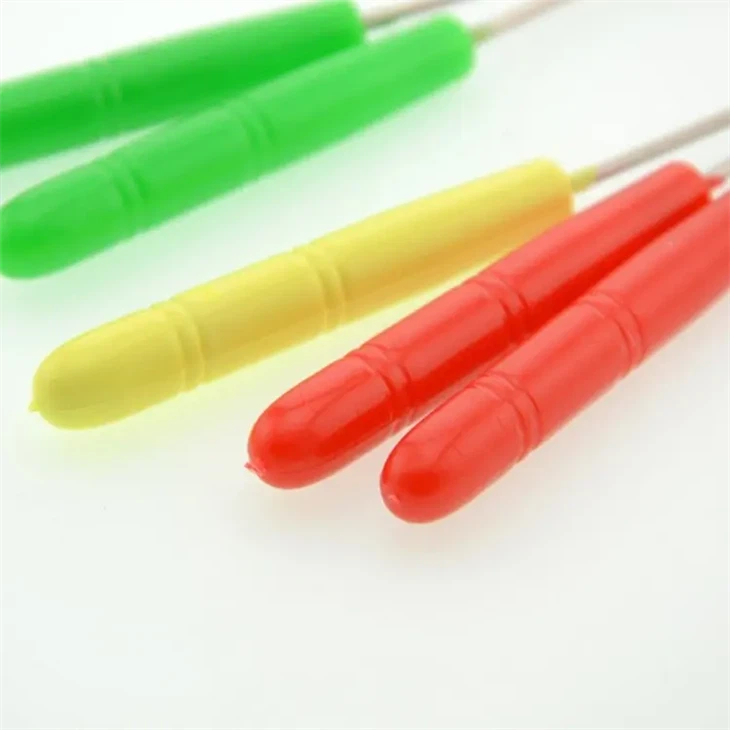
A seam ripper is a little sewing tool that exists used to cut and remove seams from clothing. A handle, shaft, and head are the most frequent components. A cutting surface is usually located at the base of the fork when the head is forked. One side of the ripper tapers to a sharp point to make insertion into tight stitching simpler.
Put the sharp point of the tool beneath the thread to be severed in the seam. The ripper gets moved vertically, allowing the thread to fall into the fork and the blade to rip through it.
Once the seam gets undone, remove the loose ends, and then re-sew them.
Advantages of Heavy Duty Seam Ripper
It is very very sharp
The most important thing is to have a sharp seam-ripper. A dull seam-ripper is a disaster-it can frustrate you and also hurt. If it is sharp, it will cut cleanly without the need to apply extra pressure.
It is ergonomically designed
If you need to use it a lot, buy ones with an ergonomic grip-yes, they are available and in a suitably big size. The small ones can get tiresome after a lot of cutting.
Pain along Carpal Tunnel on hands are common among crafters and sewists. These specially designed ones have a nonslip surface. With this handy (literally) tool, you can lessen the pressure on your wrist and finger-joints. Very useful if you are into alterations. The kind of re-opening of seams this involves is a lot.
It is relatively long
The main complaint about small ones is that you cannot reach some long tight corners with them. Long sizes is useful here.
It lasts long
Some become dull very fast and become useless. There is no way you will know in advance; even some very expensive ones fail in this section


Why Choose Us
Professional after sales service
We have a professional r & d, production, sales and after-sales team, dedicated to serving every one of our customers.
Official certification
We are always providing' quality products, excellent service, competitive prices and prompt delivery'.
No.1 sales volume
Our vision is to be the global leader of garment accessories business by addressing customers' odm demand.
Sustainable development
Our talented designers always follow the trend of the times and create unique and significant patterns which are highly appreciated by ou
Types of Heavy Duty Seam Ripper


U-shaped seam rippers
The first and the most common of the types of seam rippers is a U-shaped blade ripper. It has one pointy side of the U-shaped blade that is longer than the other. A little plastic ball exists placed on the other side for safety. The seam ripper's sharp cutting edge is on the inside curve.
C-shaped seam rippers
To remove serger and embroidery stitches C-shaped seam rippers are available. These C-shaped blades are surgically sharp and can remove a lot of stitches in a short amount of time. They can also swiftly rip holes in your fabric, so be careful.
Forked head seam ripper
The forked head is the standard type of seam ripper that mostly sewer and crafters use. It has a u-shaped blade where one side is slightly longer than the other side. Often, the forked head seam ripper is used the wrong way. The most popular way to use the sewing tool is to slide the longer side into the seam and grab the thread you want to cut. The shorter side of the tool usually has a plastic ball for protection. The curved area between the arms is very sharp, and here the thread gets sliced.
Curved blade seam ripper
The tool is sometimes referred to as the surgical seam ripper because it resembles a surgical scalpel. The blade of the seam ripper is incredibly sharp and dangerously exposed, but it can cut through the threads much faster and efficiently. Fashion professionals can quickly fix the mistakes done while quilting and sewing. It is advised that beginners should not use seam rippers, and one should be extra careful with these tools.
Why Do You Need a Heavy Duty Seam Ripper
You get to be upset over the fact that you have to rip out stitches that went squiffy on you. Making mistakes is no fun, especially when you have to go and fix them straight away.
But while I'm going to allow you to be upset about having to use a seam ripper, I'm not going to allow you to get down on yourself about it.
I've ripped out enough buttonholes, sewed on many sleeves backwards, and ripped out more zippers than I care to admit. Sometimes making mistakes is part of the process.
Your seam ripper is there to help you fix those things.
If you think about it, your seam ripper really is your least judgmental friend.
So instead of thinking, I can't believe I sewed x wrong again, think about how needing to rip out some stitches gives you another chance to fix the mistake.
Not only that, that little bit of time it takes to unpick that wonky seam? It'll give you time to gather your thoughts and help you troubleshoot what happened. Rush through it, and you may not give your brain the time it needs to know what you need to do when you try again.
How to Use a Heavy Duty Seam Ripper
Prepare the fabric
Lay the fabric flat on a sturdy surface. Ensure that you have ample lighting to see the stitches clearly. If you're dealing with multiple layers, make sure you separate them to avoid accidentally ripping through more than the intended layer.
Begin at the end
If possible, start at the end of the stitch or seam rather than the middle. This gives you more control over the process.
Insert the sharp point
Carefully slide the pointed end of the seam ripper under a stitch. The goal is to pick up only the stitch and not any part of the fabric. If you feel resistance, double-check to ensure you haven't caught the fabric.
Cut the stitch
Once the stitch is lifted, push the seam ripper slightly forward so the stitch moves into the u-shaped cutting blade. With a gentle tug, the stitch will snap.
Progress slowly
Continue the process, cutting every third or fourth stitch if you're removing a long seam. Once you've cut these anchor stitches, you can often pull the thread on one end, and it will unravel easily. For smaller areas, or more delicate fabrics, you might want to cut every stitch to avoid any potential damage.
Pull out the remaining threads
After you've cut the necessary stitches, use the seam ripper or your fingers to gently pull out the remaining loose threads from the fabric.
Smooth and inspect
Once all stitches have been removed, smooth out the fabric and inspect for any missed stitches or potential damage. If you find stray threads or missed stitches, go back and carefully remove them.
The red ball on a seam ripper is there to protect your fabrics from damage. As you slide the seam ripper under the stitches to cut them, the ball gently presses against the fabric, acting as a buffer between the sharp blade and the material. This helps prevent unfortunate slips that could lead to snags, tears, or cuts in the fabric, ensuring that your seam ripping is as safe as it is effective.
The red ball is more than just a fabric protector; it's a safety feature for both the fabric and the user as it also protects your hands. It can prevent accidental pokes or cuts to the user's hands.
It makes the sometimes tedious task of seam ripping a little bit safer and more efficient.
Despite its design to protect fabric and hands, the red ball is not foolproof. It relies on proper usage and conditions to function effectively.
Not all seam rippers have the red ball because manufacturers produce different designs and variations of this tool. The design of a seam ripper without the red ball might be simpler or more cost-effective to produce, or it may be intended for more precise work where the user feels confident in their control and less in need of the protective feature. So it is not strictly necessary for a seam ripper to function.

Other Uses for Heavy Duty Seam Ripper
Cutting buttonholes
A seam ripper has a small, sharp blade that is perfect for cutting through the fabric in a buttonhole. Simply insert the seam ripper into one end of the buttonhole and cut through to the other end. Be careful not to accidentally cut through the stitching on the other end of the buttonhole!
Cutting seams for hardware
Some types of bag hardware, like swivel locks, are attached by inserting metal prongs into the seam of the fabric. A seam ripper is great for cutting these short seams because the small, sharp blade gives you a lot of control when cutting the seam.
Cutting pointed corners
The pointed end of a seam ripper is useful when you are cutting pointed corners in your sewing projects. For example, when I sew button-down shirts, I often use a seam ripper to help me get a nice pointed corner on the collar.
Heavy Duty Seam Ripper: What Should I Look For When Buying?
There are definitely a few things to keep in mind when it comes to shopping for your perfect seam ripper, and while all of the above options are most certainly effective in ripping seams, they may not all be the perfect fit for you.
The one thing that is universal is their sharpness. Seam rippers really only have one function, cut the thread, so sharpness isn't usually a huge issue across the different types.
The differences between seam rippers typically lies in the practicality and ease of use of each option. Once you determine what you personally find most important in your seam ripper it's easier to narrow down types.
So here are a few questions to ask yourself before looking closer into any of these options:
Do you have pets or children that might find it? And exposed surgical blade may not be ideal.
Do you find yourself straining to see the tiny stitches? One with lighted/magnifier features may be the perfect addition.
Do you want to try something totally off the beaten path and don't mind a little risk? The electric version sure looks cool.
Do you like having fun fashionable notions? The brass one is a great trendy option.
Or maybe you have arthritis, or just don't like handling smaller notions. The ergonomic one with a longer handle will be your best bet.
Do you like the sustainability of simply recycling blades instead of throwing away the handle every time too? The surgical version may be a great option.
Why use a Heavy Duty Seam Ripper
Correcting mistakes
No one is perfect, and even experienced sewers make mistakes. Seam rippers allow you to remove unwanted stitches without causing damage, so you can fix errors and achieve a professional finish.
Alterations and repairs
Seam rippers are also useful for altering garments or repairing damage, such as removing seams to replace a zipper or adjust a hem.
Deconstructing garments
If you are into upcycling or repurposing old clothing, a seam ripper will make it easy to disassemble garments and salvage the fabric for new projects.
Safety Precautions When Using the Heavy Duty Seam Ripper
Safety in the sewing lab,try to prevent problems before they happen.
Keep work areas tidy and uncluttered at all times. Take only what you need to work areas.Minimize noise while in the lab for everyone's best concentration.Always cut away from you.Place the blades together when finished.When handing to someone, pass with the handle first.Don't place shears too close to the edge of the table never put pins in your mouth.Always keep your pincushion close to store your pins. If you drop a pin or needle, pick it up immediately.
Always point away from you while using it.Make sure the cover is placed on after you finish using the seam ripper.Store the iron on its heel. Never leave in the down position.Don't get your hands too close to the base of the iron.Make sure the iron is unplugged when filling with water.Always unplug when finished for the class period.Pull the plug, not the cord when disconnecting.Start at a slow speed and build up as you get more comfortable.Don't get your fingers too close to the needles.Keep your face back from the machine when sewing in case the needle breaks.Never sew over pins.Always turn off machine when not in use.Unplug machines at the end of the class period.
Our Factory
Yiwu Qianyi E-Commerce Co., Ltd was founded in 2016, located in the famous Yiwu Commodity City with convenient transportation. We can ship our goods to all over the world by express, by air, by sea and by train/truck.We mainly engages in designing, developing and producing buttons, cord lock, cord ends, buckles, zipper pulls, plastic hooks, bikini clips, bra rings sliders hooks and other garment/underwear accessory.


FAQ
Q: What is the difference between a stitch ripper and a seam ripper?
Q: What is the classification of a seam ripper?
Q: What is the little ball for on a seam ripper?
Q: What are the different types of rippers?
Q: Do seam rippers come in different sizes?
Q: Do quilters use seam rippers?
Q: What is the best way to sharpen a seam ripper?
Q: Can you remove embroidery without a seam ripper?
Q: What tool is used for ripping out stitches from seams?
Q: What is the strongest possible seam stitch?
Q: What is the strongest type of seam?
Q: What can I use as a seam ripper if I don't have one?
Q: What is the little ball for on a seam ripper?
Q: What is the difference between a stitch ripper and a seam ripper?
Q: What is the red dot for on seam ripper?
Q: How to make seam ripping easier?
Q: How do you use a seam ripper tag?
Q: What else can I use a seam ripper for?
Q: How do you fray jeans with a seam ripper?
Q: Do quilters use seam rippers?
As one of the leading heavy duty seam ripper manufacturers and suppliers in China, we warmly welcome you to wholesale high-grade heavy duty seam ripper in stock here from our factory. All our products are with high quality and competitive price. Contact us for quotation and free sample.
Side Release Plastic Buckles, Rubber Cord Stopper, 2 hole bean cord lock